My Academic Works
Roman Architecture in the Medieval Period: The Lasting Effects under Byzantine and Islamic Rule
From the 5th century to the 10th century, architectural and cultural changes took place in the Northern African cities of Tunis and Carthage because of the shift from Roman leadership to Vandal, then to Byzantine, and finally to Arab rule. Although there were changes in the architecture of this area during the Medieval Period, the styles and structural compositions of the Roman Empire remained visible and relevant in the buildings of Tunis and Carthage. This paper, through analysis of various medieval-era Tunisian structures, argues that the architecture from this period drew heavily on that of the preceding Classical period.
Art Away From Home: How XR in Museum Exhibits can Inflect Context for Greek and Roman Art
Greek and Roman art are most frequently displayed alongside one another in museum exhibits. They are surrounded by the same architecture and decor: white marble, columns, arches, and blank walls. These objects are separated by both time and place, and thus they held different purposes from one another and were presented in very different contexts. They way we see ancient art today distorts our understanding, as its presentation in the modern museum is so far from what was intended. I developed a hypothetical museum exhibit that allows the visitor to see ancient art pieces in both their modern museum context and in a replicated version of their original context in order to compare the two through the use of augmented reality.
Art Away From Home: Augmentation Material
View Below
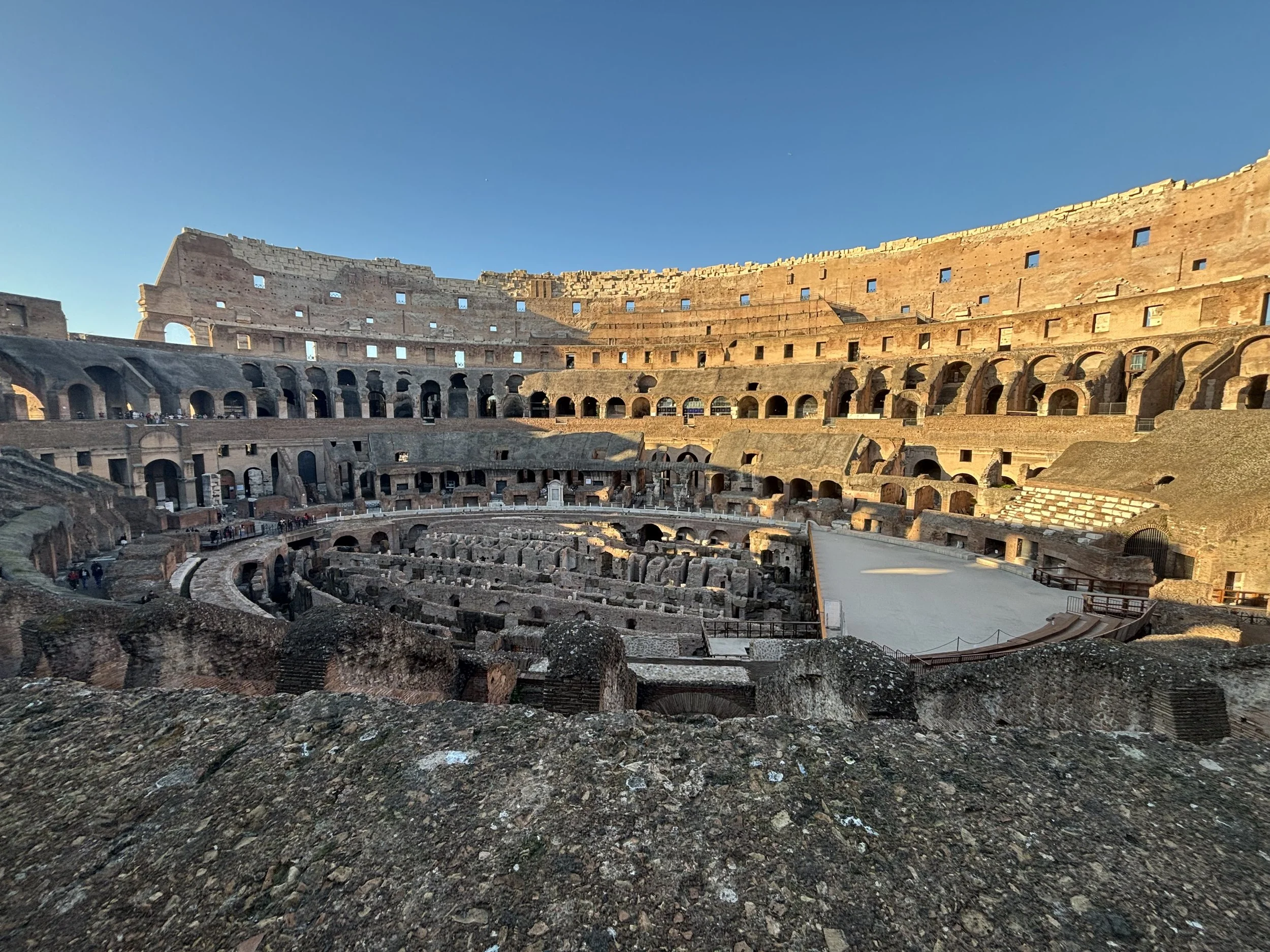
Interior of the Colosseum, Rome: Original Photo
Art Away From Home: In-Person Display
Imagery of the Virgin and the Nazareth Capitals
Most Recent
Four of the five Nazareth Capitals each depict a scene from the life of one of the twelve Apostles. The fifth capital contains two figures, one unidentified female and one male, who is assumed to be an apostle. By comparing the figures with other works containing similar themes from the same period as well as research into writings and traditions relating to the scene, this paper identifies the female figure as an intentional blending of the Virgin Mary and the Christian figure of Ecclesia, as well as proposes a potential identity as St. Andrew the Apostle for the accompanying male figure.
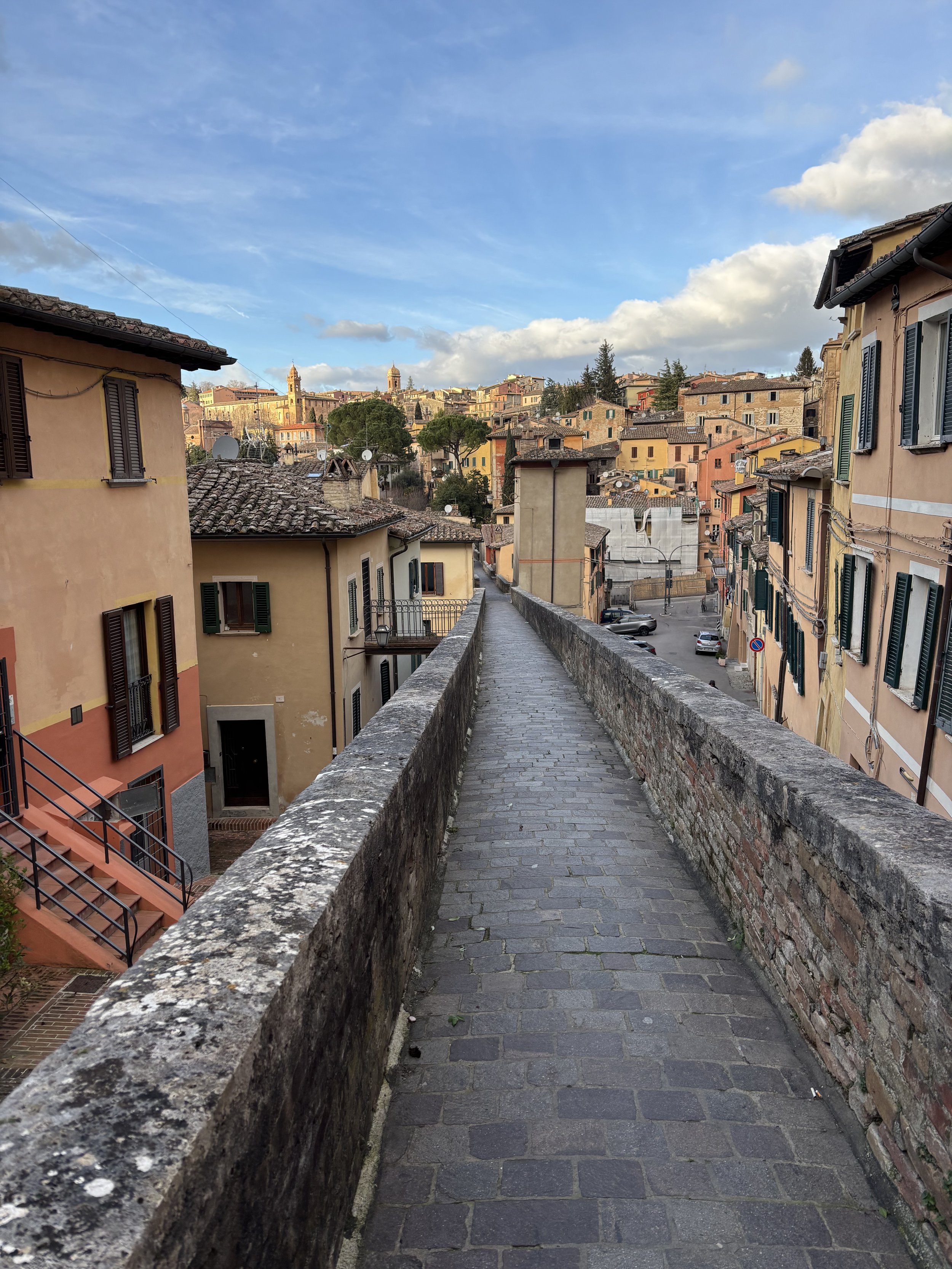
Medieval Aqueduct, Perugia: Original Photo
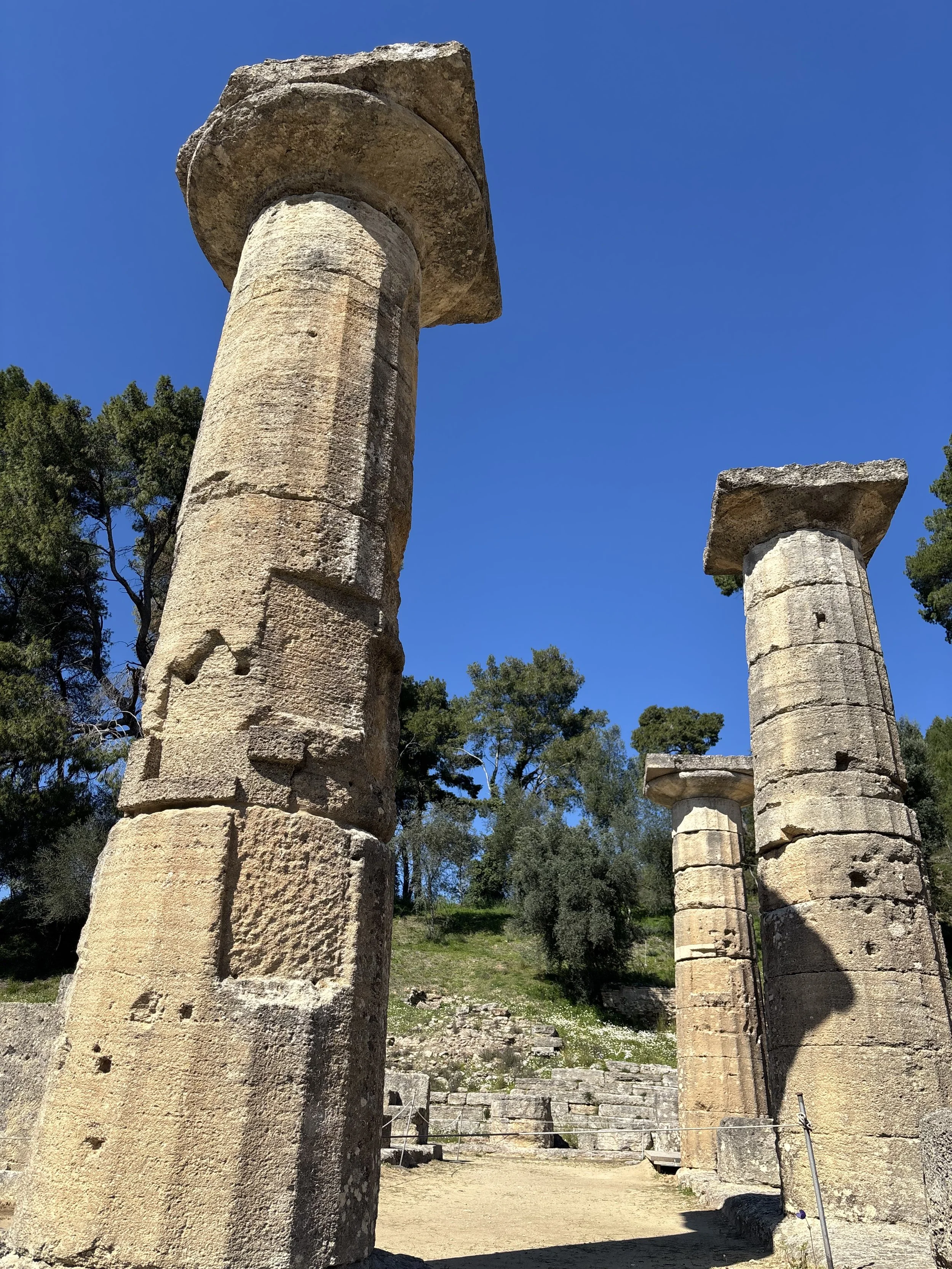
Columns from Ancient Olympia Archaeological Site: Original Photo